LET'S HELP OTHERS: BECOME A VOLUNTEER

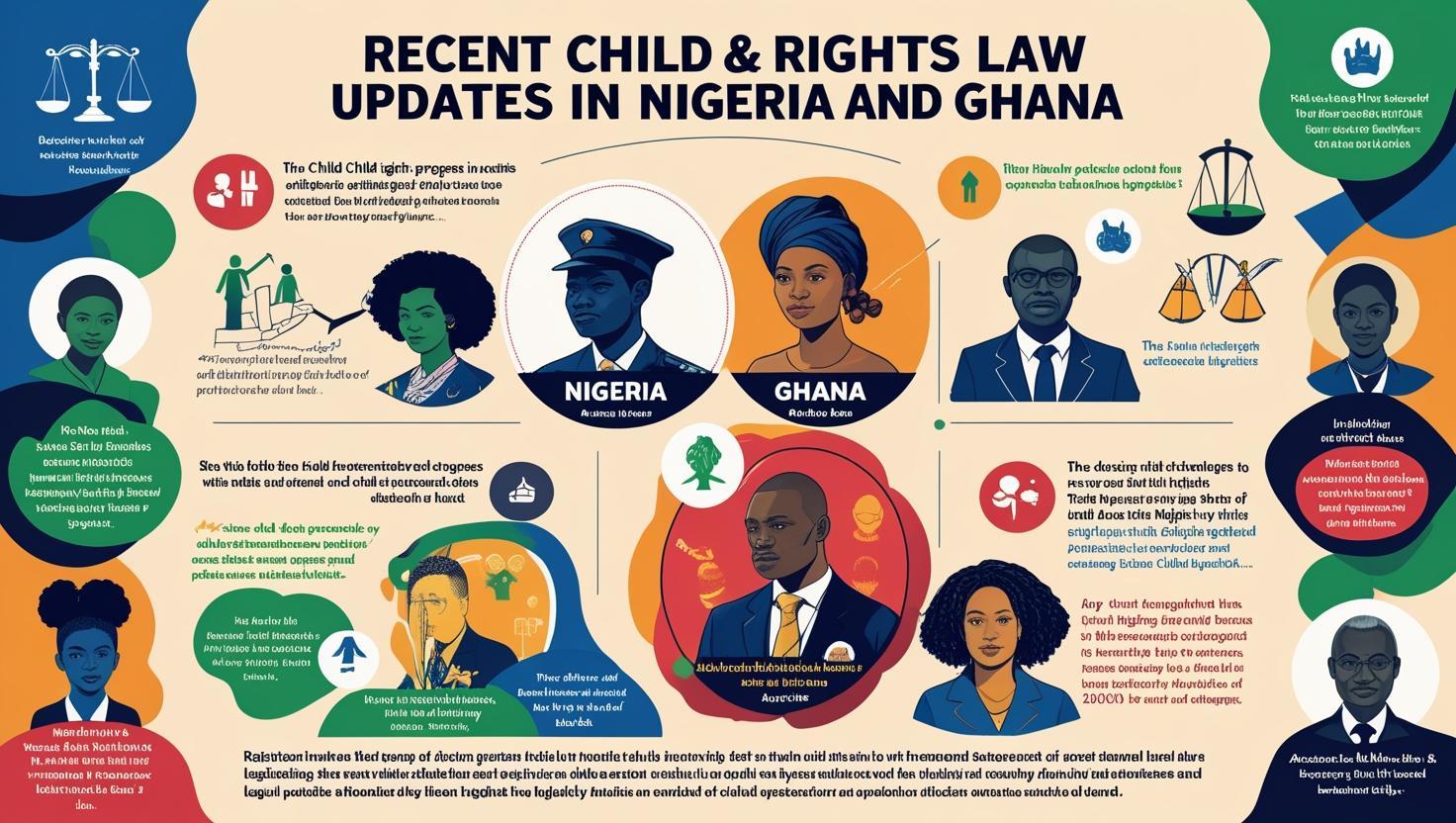

Child rights legislation in Nigeria and Ghana has seen significant changes in recent years, aiming to strengthen protections for children across West Africa. While laws are improving, challenges in enforcement, cultural barriers, and child protection gaps remain.
Nigeria: Nationwide Adoption of the Child Rights Act
Key Developments
Nigeria’s Child Rights Act (CRA), originally enacted at the federal level in 2003, was adopted nationwide by all 36 states in 2024. This historic step aims to harmonize child protection laws across the country (Nigerian Rights NG).
The CRA enshrines essential rights, including:
• Protection from abuse, neglect, and exploitation
• Right to survival and development
• Right to education and participation in decisions affecting them
• Establishment of Family Courts and specialized child protection units
Implementation Challenges
Despite these gains, experts note several implementation gaps:
• Inconsistent enforcement across states, leaving many children without real protection.
• Contradictions with other laws, like the Young Persons Act, create legal ambiguity, especially regarding the age of criminal responsibility.
• Cultural and religious practices sometimes clash with CRA provisions, limiting enforcement in rural areas.
Expert opinion: “Laws are only effective if enforcement mechanisms are strong. In Nigeria, creating specialized child protection units is a positive step, but without funding and training, they cannot achieve meaningful change,” says Dr. Adebola Olatunji, child rights specialist.
Recent Case Highlight
In November 2024, 29 children aged 14–17 were charged with treason and public disturbance for protesting Nigeria’s cost-of-living crisis. Legal experts have raised concerns that prosecuting minors under these circumstances violates the CRA, which prohibits harsh penalties for children (AP News).
Ghana: Strengthening Children’s Rights Under the Children’s Act
Legal Framework
Ghana’s Children’s Act (1998, Act 560) remains the cornerstone of child protection. It consolidates laws related to adoption, child labor, and maintenance, providing a comprehensive framework for safeguarding children.
Challenges in Implementation
Despite legal provisions, significant challenges remain:
• Education barriers for adolescent girls, especially those who are pregnant or parenting.
• Child labor persists, with many children aged 5–17 working in hazardous conditions.
• Children with disabilities face limited access to education and social services.
Human Rights Watch’s 2024 submission to the UN Committee on the Rights of the Child highlights these concerns, urging Ghana to strengthen enforcement (HRW).
Both countries have strong legal frameworks, but the gap between law and practice is wide. Strengthening social services and monitoring mechanisms is crucial,” notes Deborah Dzifah Tamakloe, child welfare expert.
Local News Highlights
• Illegal child labor in Nigeria’s lithium mines: AP News reported on 2024 findings that many children work in hazardous mining conditions, despite national laws prohibiting child labor (AP News).
• Protection of child brides in Nigeria: Police intervened in 2024 to protect a 12-year-old girl who married a 63-year-old man, highlighting ongoing enforcement challenges (NY Post).
• Child rights advocacy in Ghana: HRW and local NGOs have pushed for improved protections for children with disabilities and adolescent girls, prompting government engagement ahead of the UN Committee review (HRW).
Recommendations
1. Strengthen enforcement mechanisms: Provide training and funding for Family Courts, child protection units, and social workers.
2. Harmonize conflicting laws: Align the CRA with other national legislation to avoid ambiguity.
3. Target cultural barriers: Work with communities and religious leaders to implement child protection norms.
4. Prioritize education access: Focus on adolescent girls and children with disabilities to ensure inclusive development.
5. Combat child labor: Enforce labor laws and provide social protection for vulnerable families.
Child rights laws in Nigeria and Ghana have advanced significantly, reflecting a growing commitment to protecting children.
However, implementation gaps, cultural resistance, and resource limitations continue to challenge the full realization of these rights.
As local and international stakeholders push for reforms, the next few years will be critical in bridging the gap between legislation and lived reality for children in West Africa.
Laws alone cannot protect children; strong enforcement, social support, and community engagement are essential to ensure every child’s rights are respected and upheld.